


The best stadiums in the world are not just places to watch sports. These are experiential environments where every aspect of the experience – the architecture, the food, the sounds – is designed to heighten emotion. Stadium activation design is about adding your brand to that immersive environment in a way that feels worthy of the space and the audience that fills it.
Understanding the Stadium as a Design Environment
Designing for a stadium is fundamentally different from designing for a trade show booth or a retail pop-up. The scale is different, the audience is different, and the competitive context is different. You are not simply competing with other brands for attention. You are trying to earn a place in an experience that the audience already values deeply. That requires a different level of creative ambition and fabrication quality than most other marketing contexts demand.
Reading the Physical Space
Effective stadium activation design begins with a thorough understanding of the physical environment. Where will fans be moving? Where do they gather naturally before the game and during halftime? What sightlines exist from seating areas that could make a large installation visible from a distance? What are the structural and safety requirements of the specific venue? Answering these questions before design begins ensures that the final installation works with the environment rather than against it.
Matching the Energy of the Crowd
A stadium crowd operates at a level of emotional intensity that most other marketing environments simply do not reach. The best activations match and even amplify that energy rather than offering a quieter, more contemplative experience. Vibrant colors, large shapes, interactive pieces that offer a reward for participation that’s satisfying and shareable, and designs that pay homage to the sport and the team all combine in an activation that sits comfortably in the high-energy environment of a live game.
Five Strategies That Make Stadium Activations Work
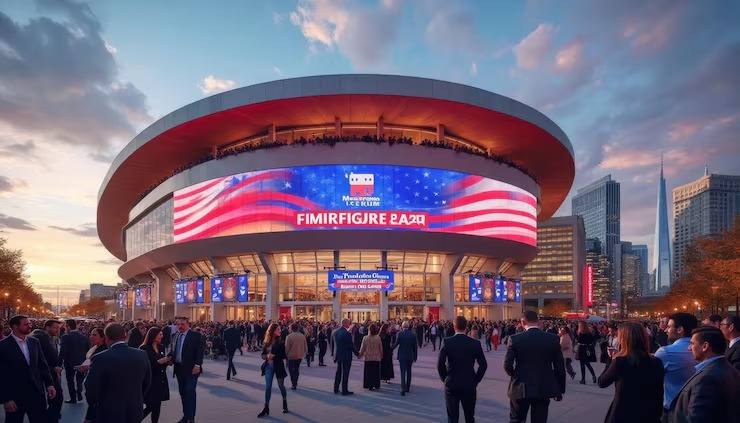
Success in stadium activation is not accidental. It comes from applying specific strategies that have proven to work in this environment consistently across a wide range of brands, sports, and venue types.
- Build at a scale that commands attention from across the concourse. If people cannot see it from a distance, it will not draw the crowd you need.
- Design a natural photography moment into the installation from the beginning. The best activations make it obvious where to stand and what to photograph.
- Create an interactive element that rewards participation. Passive displays attract passive glances. Interactive experiences attract engaged crowds that stay longer and share more.
- Cobrand story to fan story. Activations that feel like gifts, not ads, can be about celebrating the sport, the team or the fan community.
- Build for durability and reusability. Stadium environments are physically demanding, and a build that holds up across an entire season delivers dramatically better cost efficiency than a single-use installation.
The Role of Fabrication Quality in Stadium Activations
An ambitious design is only as good as the fabrication that realizes it. In a stadium, where thousands of people will interact with the installation and many more will see it from a distance, fabrication quality is visible. Rough finishes, inaccurate color matching, and structural instability all communicate a lack of investment that sophisticated sports audiences notice immediately. The reverse is equally true: a beautifully fabricated, well-finished installation communicates quality and credibility that extends directly to the brand.
Why In-Stadium Activations Demand the Best Materials
The physical demands of stadium environments require materials that meet a higher standard than typical event marketing contexts. Hardcoated foam structures handle the impact, weather exposure, and constant handling of a high-traffic public space without degrading visually. Automotive-grade paint finishes resist fading and scuffing in ways that standard paints do not. These material choices are not luxury upgrades. They are practical requirements for an installation that needs to perform across an entire season.
Conclusion
Stadium activation design is one of the most demanding and rewarding disciplines in experiential marketing. When it is done well, the result is a brand moment that becomes part of the fan experience, a physical landmark within the venue that fans seek out, photograph, and talk about long after they leave the stadium.
FAQ
Q1: What is the most important design principle for stadium activations?
Scale and visibility are the most critical starting points. If an installation cannot be seen and identified from a distance, it will not attract the crowd engagement that makes it successful.
Q2: How do you make a stadium activation feel authentic to the fan culture?
By designing activations that celebrate the sport, the team, and the fan community rather than simply displaying brand logos, you create experiences that fans perceive as additions to their game-day experience rather than advertising interruptions.
Q3: What is a realistic budget for a quality stadium activation installation?
Budgets vary widely based on scale and complexity, but working with an experienced fabrication partner who provides transparent pricing and clear project scopes helps ensure that investment is allocated effectively.